Curriculum Vitae 2026
Researcher in earthquake engineering and disaster resilience, working where structural performance, sensing and human behavior meet. Trained in architecture and computational design; graduate coursework in finite element methods and structural health monitoring; ten years designing sensor-driven and AI systems in industry.
Research Interests
- Structural health monitoring as public infrastructure: turning sensing capacity that already exists in cities toward post-disaster assessment for the people who live there
- Testing vernacular and hybrid construction (earthen, confined masonry, found and recycled materials) so engineers can evaluate it on its own terms, with an eye toward code recognition
- Human behavior in hazards: how occupants perceive, navigate and evacuate damaged buildings, and how that behavior shapes response and reconnaissance
- Computational methods: finite element analysis, parametric modeling and agent-based simulation, and their integration as AI changes design and analysis tools
Education
University of California, San Diego
Graduate coursework, MS in Structural Engineering (no degree conferred) · San Diego, CA · 2022–2025
- Completed: Computational Techniques in Finite Elements; Sensors and Data Acquisition for Structural Health Monitoring; Structural Engineering Seminar
- Self-funded and taken alongside full-time work at Adobe
University at Buffalo, The State University of New York
Master of Architecture · Buffalo, NY · 2015
- Emphases in computational design and inclusive design
- Thesis: Life, Limb, and the Pursuit of Architecture: Exploring the Application of the Kansei Engineering Methodology for Evaluating Kitchen Products for Use in Post-Disaster Transitional Shelters (completed 2014). Chair: Korydon Smith
- Structures I–III; audited engineering structures courses; enrolled in UB's School of Engineering and Applied Sciences as an intended Civil Engineering major, Fall 2013
Webster University
BA in German, Minor in Pre-Architecture · St. Louis, MO; Vienna, Austria; Munich, Germany · 2010
- International Distinction; Departmental Honors, International Languages and Cultures; Dean's List
- Pre-architecture coursework; studied at Ludwig-Maximilians-Universität München and Webster Vienna; completed the degree in three years
Additional Coursework
Peralta Community Colleges · Oakland, CA · 2019–2021
- Mathematics through Calculus II, III (review), differential equations, and linear algebra
Research Experience
Graduate Intern, Earthquake Engineering Research Institute (EERI)
Oakland, CA · June–August 2013 · Supervisor: Marjorie Greene
- Wrote research reports for the World Housing Encyclopedia, the Concrete Coalition and the Global Earthquake Model, including a report for the GEM Building Taxonomy completed with Svetlana Brzev
- Attended technical seminars at PEER and SPUR on the policy dimensions of seismic risk reduction
- Building typology classification; technical writing for an international engineering audience
Graduate Researcher, MArch Thesis, University at Buffalo
Buffalo, NY · 2013–2014 · Chair: Korydon Smith
- Designed and ran a mixed-methods study, under IRB review, applying Kansei Engineering, a statistical framework for mapping user perception onto design features, to kitchen products for post-disaster transitional shelters
- Built a survey instrument measuring perceived aesthetics, durability, cost, ease of use and social perception; analyzed results in SPSS and R
- Typeset the thesis in LaTeX; presented the work as a peer-reviewed paper at the 10th U.S. National Conference on Earthquake Engineering (2014)
- Study design; human-subjects research; statistical analysis
Technical Illustrator, Victoria University of Wellington / EERI World Housing Encyclopedia
Remote · April–September 2021 · PI: Andrew Charleson
- Produced technical illustrations for Earthquake-Safe Buildings, a series of articles on improving the seismic safety of buildings in developing countries; topics included confined masonry, soft stories, unreinforced masonry and bracing
- The series has been translated into 10+ languages
- Communicating structural behavior visually to non-engineering audiences
Bennett Linkage Deployable Structure
Independent research, begun at University at Buffalo · 2013; rebuilt 2026
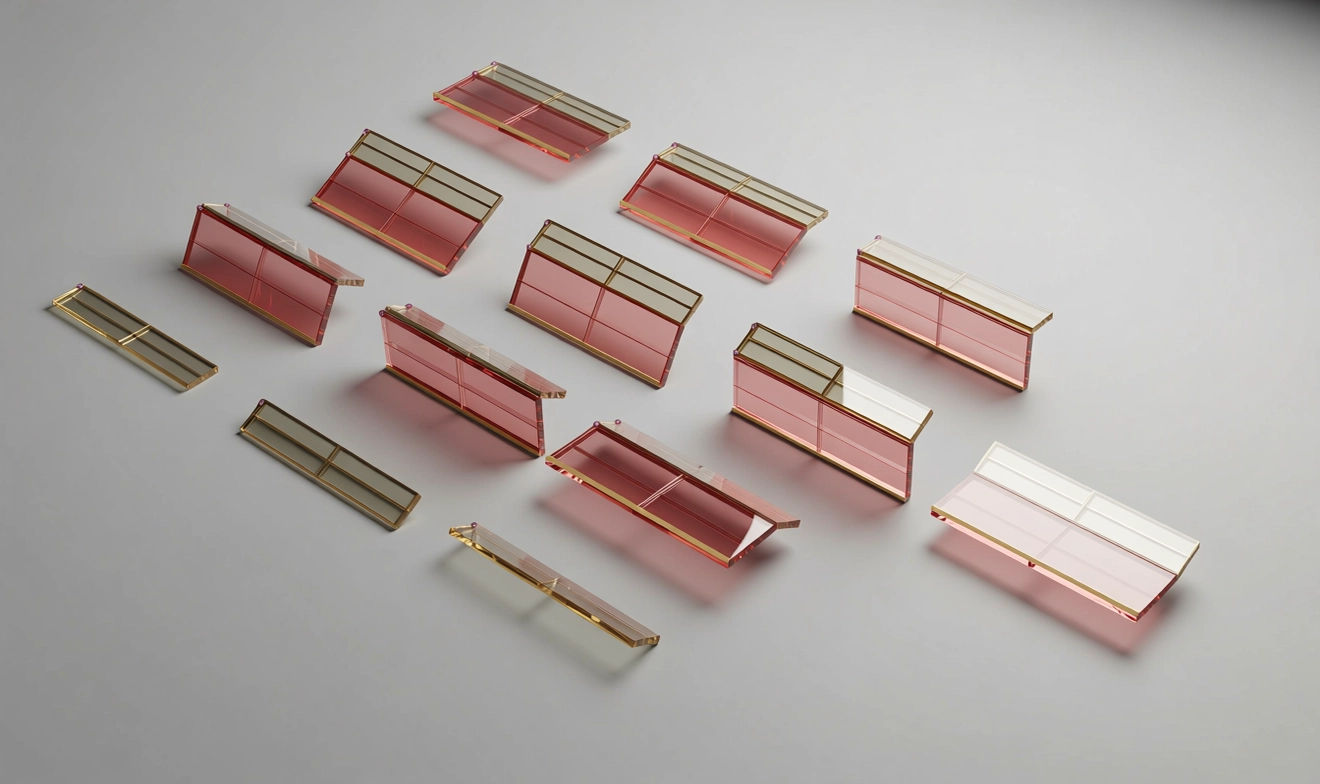
- Developed a lightweight 8-DOF Bennett linkage system, prompted by its use in temporary shelters, and connected it to actuators, fabric and an Arduino to build an installation visualizing earthquakes by magnitude (2013)
- Rebuilt it in 2026 with Grasshopper specialist Laiba Uzair as a parametric model in which the opening responds continuously across the magnitude range
- Spatial mechanisms; parametric modeling; data-driven actuation
Cognitive Reserve & Disaster Response
Independent research · November–December 2025
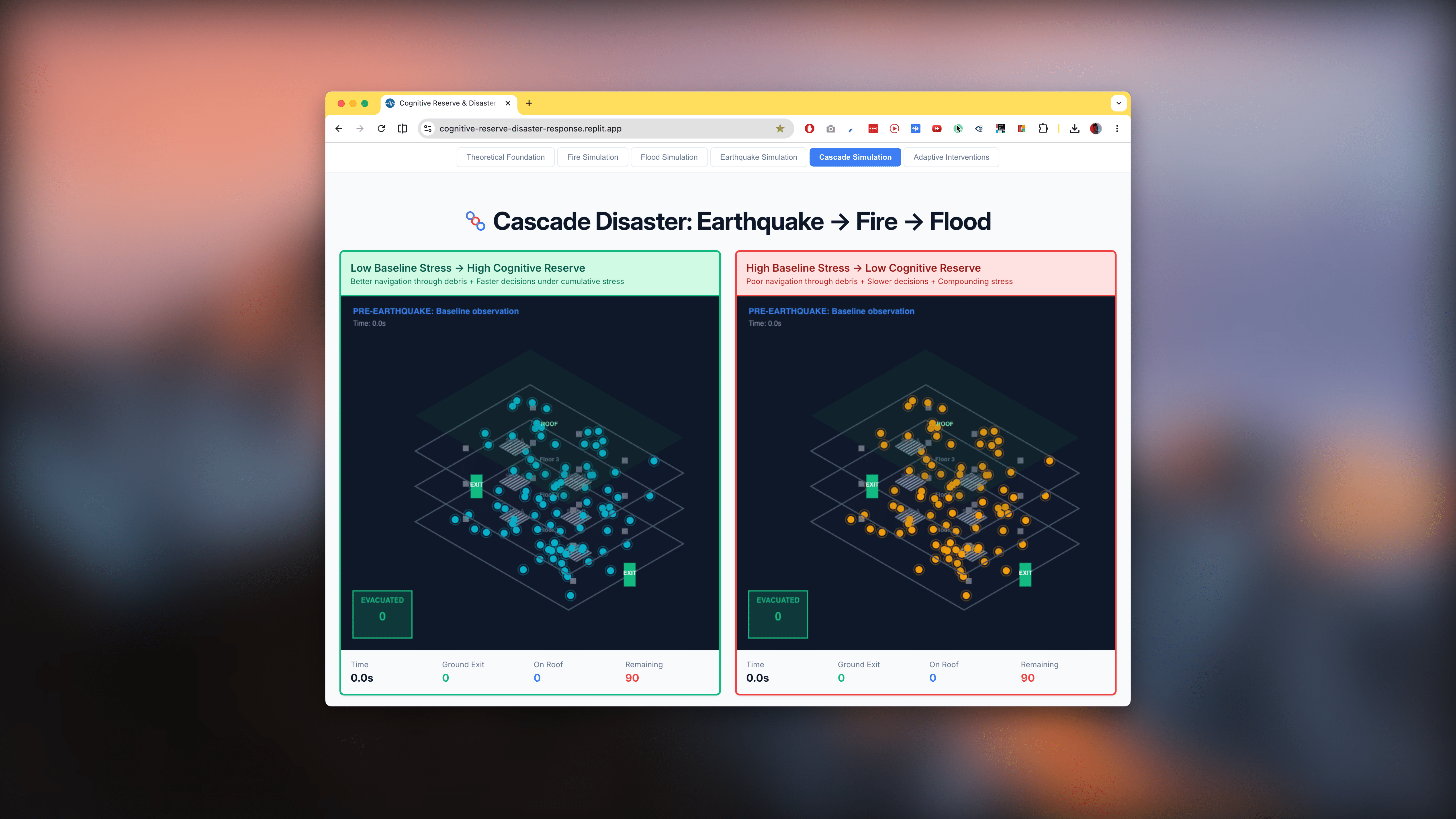
- Built an agent-based evacuation simulation in JavaScript modeling how cognitive load under environmental stress shapes wayfinding during single and cascading hazards, drawing on structural health monitoring concepts and building performance
- Extends the thesis question (how people perceive the built environment under stress) into simulation; presented to Adobe's Design organization
- Prototype: cognitive-reserve-disaster-response.replit.app
- Agent-based modeling; simulation; rapid computational prototyping
Big Book of Buildings
Founder and Lead Researcher · 2016–present
- Ongoing documentation project photographing and analyzing building structural systems across 30+ countries, with attention to seismic design strategies, material performance and construction detailing
- Field documentation; comparative analysis of construction systems
Publications and Presentations
Peer-reviewed conference paper
Farmer, B. R. (2014). "Life, Limb, and the Pursuit of Architecture: Using Product Design to Positively Influence Post-Disaster Transitional Housing among Impoverished or Displaced Populations." Proceedings of the 10th U.S. National Conference on Earthquake Engineering, Anchorage, AK, July 21–25, 2014. Paper 1741, poster session.
Thesis
Farmer, B. R. (2015). Life, Limb, and the Pursuit of Architecture: Exploring the Application of the Kansei Engineering Methodology for Evaluating Kitchen Products for Use in Post-Disaster Transitional Shelters. Master of Architecture thesis, University at Buffalo, The State University of New York.
Patent application
Galvez, L. F., Liu, T., Yakovenko, I., Farmer, B. R., Nicknam, A., and Okamoto, S. Content Management of Digital Retail Displays. U.S. Patent Application Publication No. 2019/0287120 A1, Target Brands, Inc. Filed March 19, 2019; published September 19, 2019.
Internal presentations
- "Aesthetics: The Forgotten Variable in Disasters and Wayfinding." Adobe Design organization, December 2025.
- "Tests That Ship: A Living Framework for Navigating Organizational Complexity." Adobe Design organization, November 2025. Presented with five interactive prototypes.
- Presentations and workshops on parametric design and architectural photography, Adobe, 2019–2024.
Professional Experience
Staff Designer, Emerging Design (now Creative AI Platform), Adobe
San Diego, CA (remote) · 2024–present
- Designed onboarding and evaluation for Firefly Self-Service Custom Models, which opened custom model training to every customer; designed feedback that assesses whether a user's uploaded training images will support a reliable model and how to improve the set
- Contributed testing and LangSmith evaluation design (manual and automated) to Adobe's MCP connectors for Claude and ChatGPT and the Firefly AI Assistant; contributed code through GitHub pull requests
- Audited how AI agents read Adobe.com and built a dual-mode prototype serving people and agents from one information architecture; presented to SVP and VP leadership
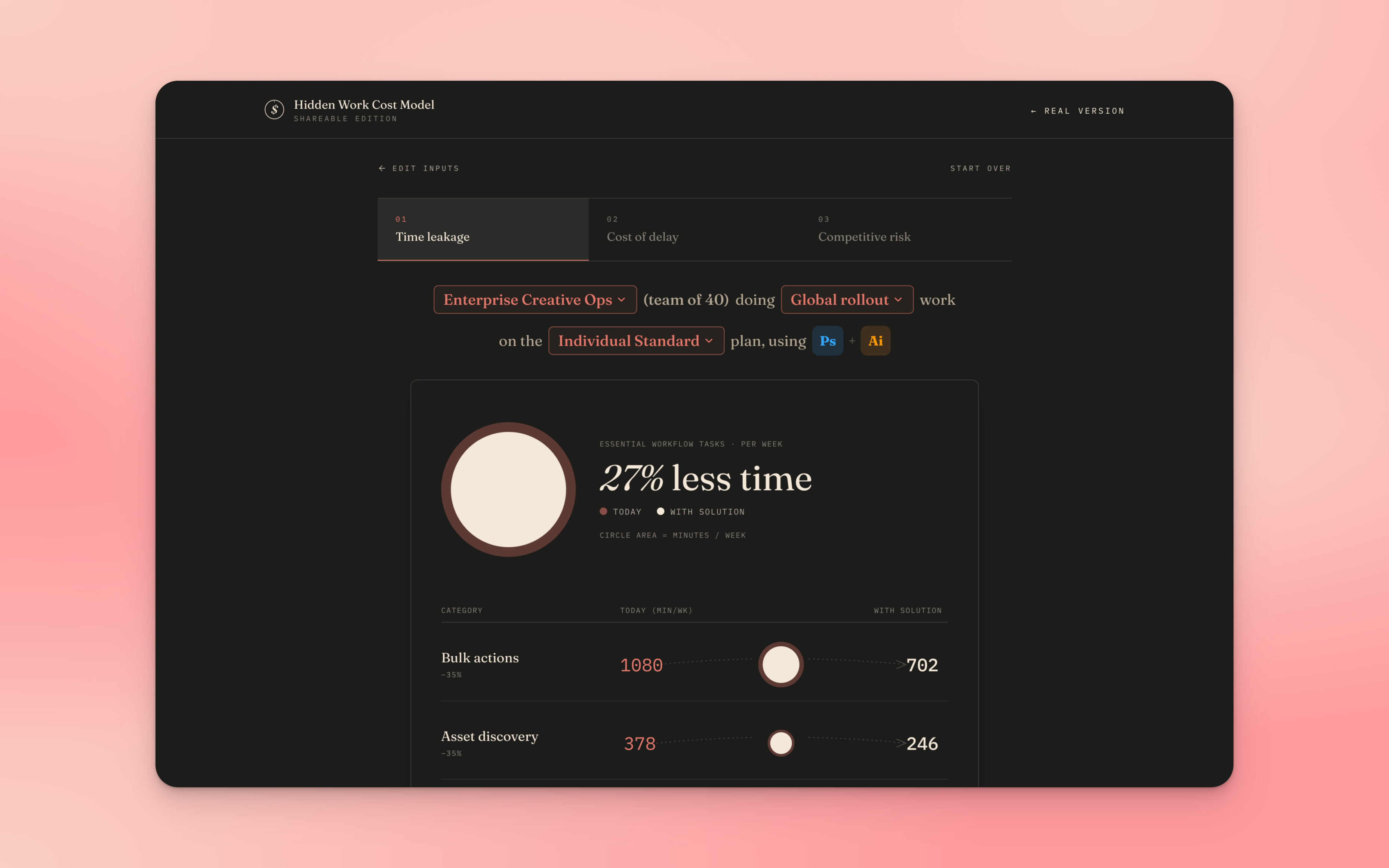
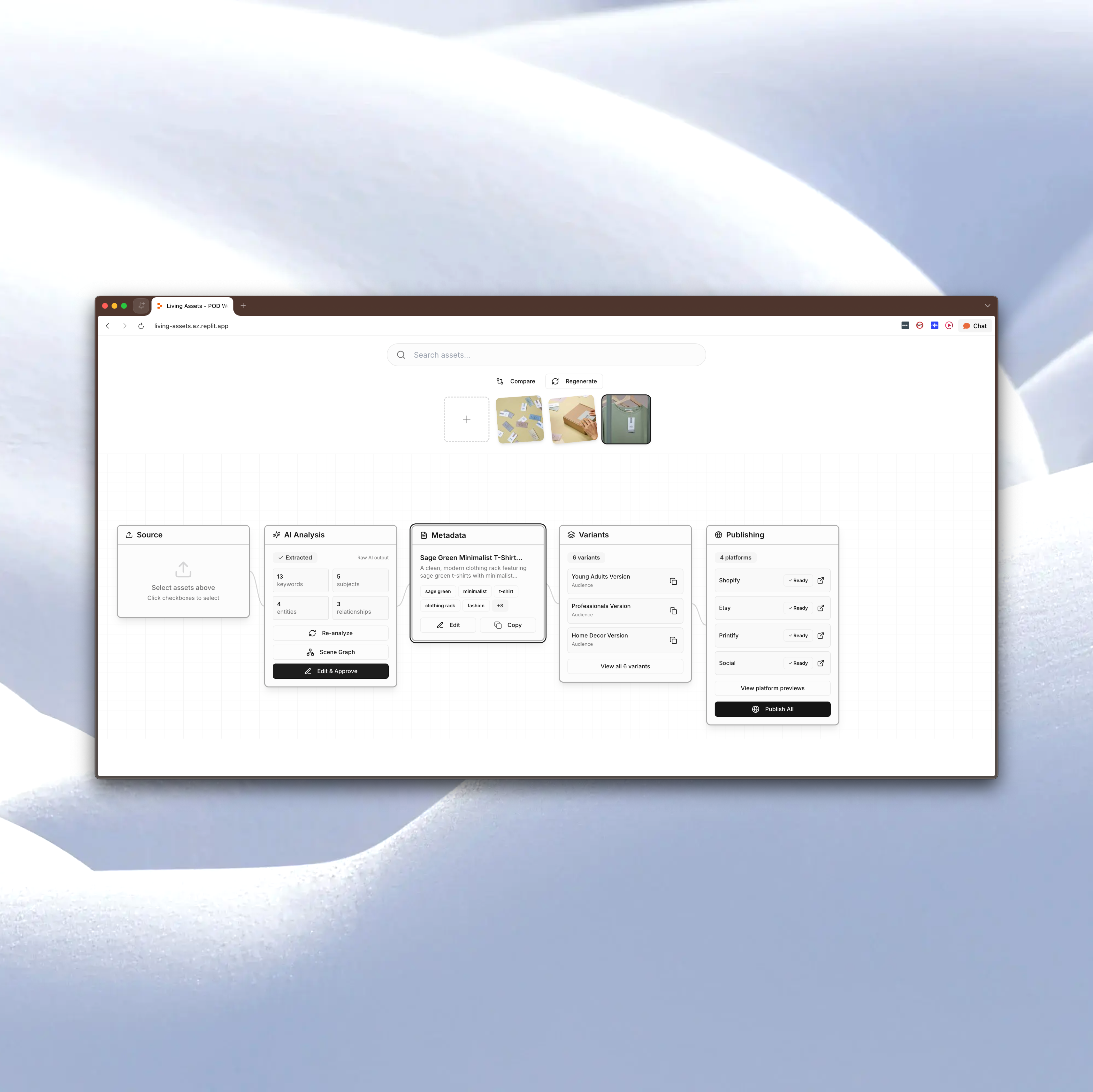
- Built working software prototypes, including a cost model of coordination work in creative teams (React/TypeScript/Express) and a 5,800-line metadata schema for AI-readable creative assets
- Model evaluation; data-quality assessment; LLM failure analysis; full-stack prototyping
Design Manager → Design Manager II, Creative Cloud Growth and Adobe Express, Adobe
San Diego, CA (remote) · 2021–2024
- Led growth design for Photoshop, Illustrator and other Creative Cloud applications and Adobe Express; built the team to 11 plus contractors
- Team delivered 300+ A/B experiments a year (2021–2023) across onboarding, conversion and retention; adapted experiments for markets including Brazil, Germany, France, Japan and Korea
- Co-designed Greenhouse, Adobe's central experiment registry linking tickets, timelines and variants; still in use
- Led workshops presenting parametric design as a visual model for experiment variables
- Experimental design at scale; statistical readouts; research operations; team leadership
Senior Designer, Photoshop Growth Lead, Adobe
San Francisco, CA · 2019–2021
- Recruited for combining code and design with quantitative skill
- Designed experiments with product, marketing, data science and engineering partners; built spreadsheet-driven variant matrices to test copy and imagery at scale
Senior Designer, New Ventures and Accelerators, Target Corporation
San Francisco, CA · 2016–2019
- Hired for architectural training; designed physical and digital retail systems spanning spatial design, projection mapping, sensors and startup software
- Sole designer of Unison, an in-store platform pairing displays with camera and sensor data on how shoppers use connected products; scaled from one pilot store to 850+
- Co-inventor on the resulting patent application (US 2019/0287120 A1): anonymous, time-stamped sessions from display cameras, with sensor data analyzed per session
- Designed a computer-vision style recommendation platform and a blockchain registry tracing paper products to audited factories
- Instrumented physical environments; sensor data pipelines; hardware-software integration across hundreds of sites
Architectural and Computational Designer, Boston Valley Terra Cotta
Orchard Park, NY · 2015–2016
- Recruited for computational design training; built parametric models of terra cotta façade assemblies for large commercial buildings in Rhino and Grasshopper, scripted in Python
- Coordinated steel anchorage details with structural engineers and manufacturing constraints with moldmakers
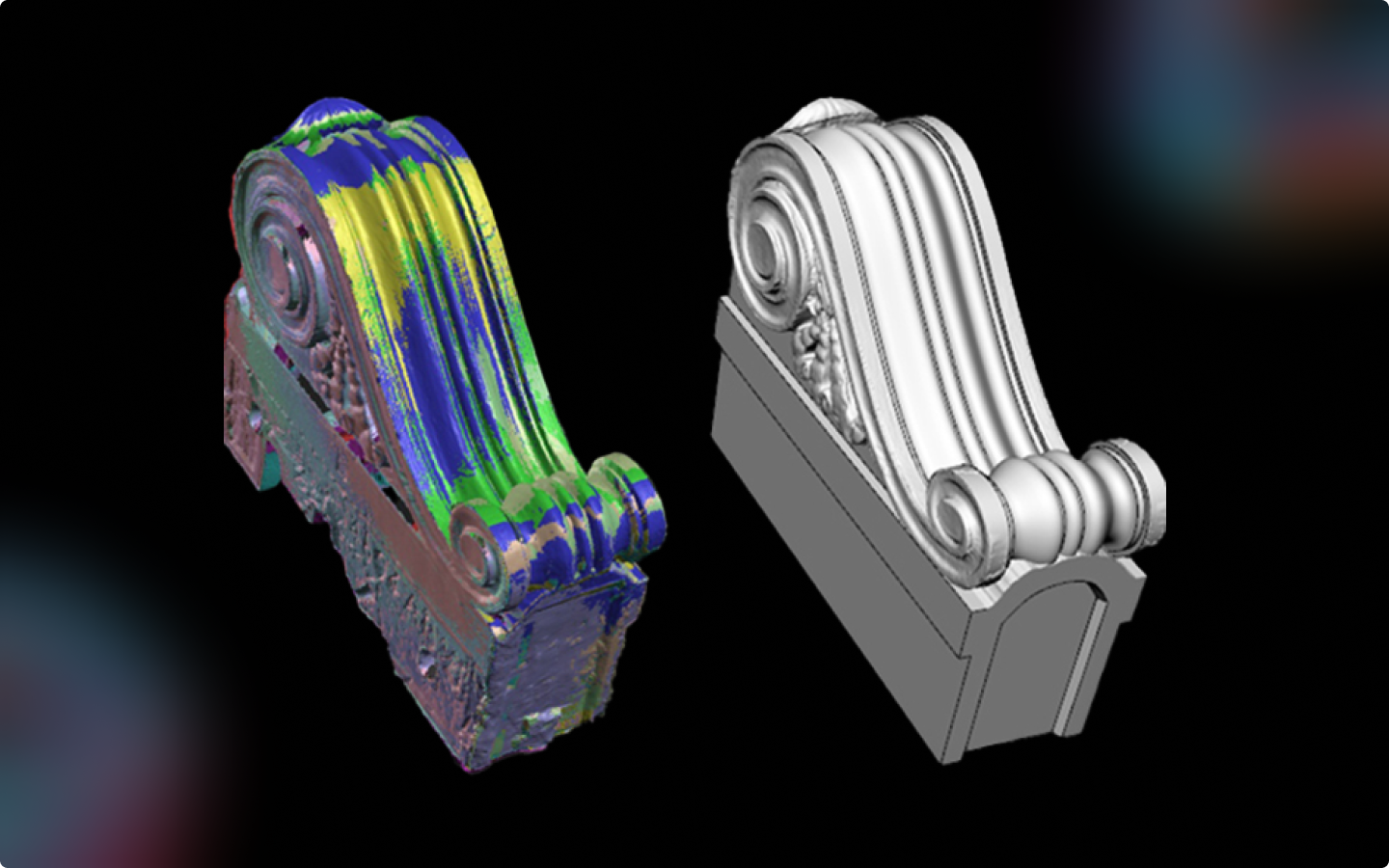
- Produced watertight models for 5-axis CNC routing and laser cutting; used photogrammetry and form-finding for complex geometry; worked hands-on through fabrication and quality control
- Parametric modeling; cladding-to-structure load paths; digital fabrication
Project Management and Marketing, Singleton Construction Consultants
Buffalo, NY · 2014–2015
- Managed architectural documentation, construction cost estimating and project coordination for residential, civic and commercial buildings; conducted site visits on active projects
Founder and Designer, Psi Graphics, LLC
2014–2019
- Founded a freelance design and web development practice while employed full time; taught myself to code and built websites, branding and campaigns for 20+ startups, nonprofits and small organizations
Graduate Intern, Design and Data Visualization, Erie Canal Harbor Development Corporation
Buffalo, NY · 2012, 2014
- Produced presentations, signage and interactive data visualizations for the state waterfront development agency, including a visualization of seven years of wind data used for event planning and working closely with Perkins+Will on Canalside
Teaching
Teaching Assistant, Structures I and II, University at Buffalo
School of Architecture and Planning · 2013–2014 · Instructor: Peter Grace, PE
- Taught alongside the instructor in the required structures sequence for architecture students
- Tutored students across the full Structures I–III sequence; while auditing engineering structures courses, helped Structures III students build analysis models and work through core concepts
Bootcamp Instructor
Berkeley, CA · 2019–2020
- Led a design and frontend dev bootcamp cohort and helped graduates find jobs after the program
Mentoring, Adobe
2021–2024
- Led and developed a design team of up to 11, hiring four; two former reports now manage teams of their own
Awards and Honors
- 12NCEE Logo Designer and Travel Grant, Earthquake Engineering Research Institute; travel grant sponsored by Computers and Structures, Inc. (2022)
- SE Pathways Cohort, Structural Engineers Association of California; one of 47 students and early-career engineers funded to attend the 2022 SEAOC Convention (2022)
- 10NCEE Travel Grant, sponsored by FEMA, USGS, the Charles Pankow Foundation and EERI (2014)
- PELLA Architectural Fenestration Competition, scholarship recipient, University at Buffalo (2011)
- Buckminster Fuller Merit Scholarship, University at Buffalo, awarded with MArch admission (2010)
- International Distinction and Departmental Honors, International Languages and Cultures, Webster University (2010)
- Benjamin A. Gilman International Scholarship, U.S. Department of State (2009)
- DAAD Undergraduate Scholarship, German Academic Exchange Service, for study at LMU Munich (2009)
- Woman of Excellence Scholarship, Junior Year in Munich
- Additional undergraduate scholarships: German American Heritage Society Study Abroad Grant; Leif Sverdrup International Scholarship; Munich Summer Fellows, Junior Year in Munich; Bravo! Grant, Scholarship Foundation of St. Louis; Webster University Academic Scholarship; Webster Dean's Award for Service. Funded the BA largely through about 20 scholarships.
Technical Skills
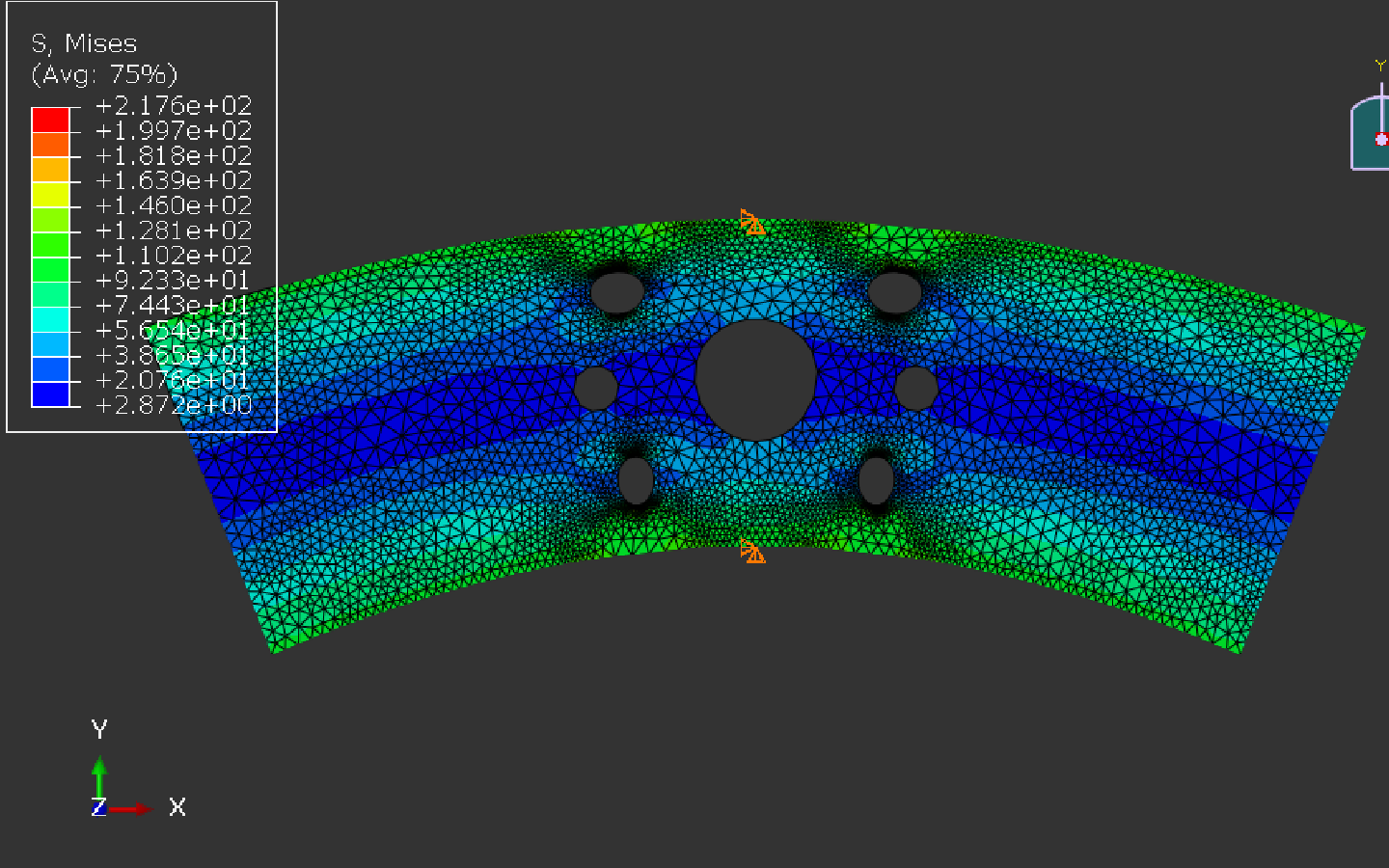
- Structural analysis and FEA: Abaqus (mesh convergence studies, h-adaptive refinement scripted in Python, Richardson extrapolation), RISA 2D/3D, Karamba
- Sensing and data: sensor and data acquisition design for SHM; camera and sensor data pipelines in instrumented retail environments; Arduino
- Statistics and research methods: SPSS, R, survey design, A/B experimental design, IRB-reviewed human-subjects research
- Programming and simulation: Python, JavaScript, React/TypeScript, agent-based simulation, LLM evaluation (LangSmith), Git and GitHub
- Parametric modeling and CAD: Rhino, Grasshopper (form-finding, optimization, data-driven actuation), AutoCAD, Revit
- Fabrication: 5-axis CNC routing, laser cutting, photogrammetry, 3D printing, physical prototyping
- Communication: LaTeX, technical illustration, Adobe Creative Suite, Figma
- Languages: English (native), German (fluent, ~C2), Spanish (intermediate, ~B1)
Professional Memberships, Training and Service
- Earthquake Engineering Research Institute (EERI), member since 2013
- Structural Engineers Association of Northern California (SEAONC), member since 2018
- Structural Engineers Association of San Diego (SEAOSD), member
- Safety Assessment Program (SAP) evaluator training, California Governor's Office of Emergency Services (Cal OES), 2020
- SEAOC Functional Recovery webinar series, 2026
- Rise Academy executive leadership cohort, 2020
- Founder, Structural Engineering Education Fund for Womxn of Color (2023–2025): raised just over $4,000 for structural engineering students and donated the proceeds to the NCSEA Foundation diversity scholarship through Tipping Structural Engineers
- Co-founder and President, ubNOMAS, University at Buffalo chapter of the National Organization of Minority Architecture Students